Floristy: A Timeless Script Handwritten Font for Makers
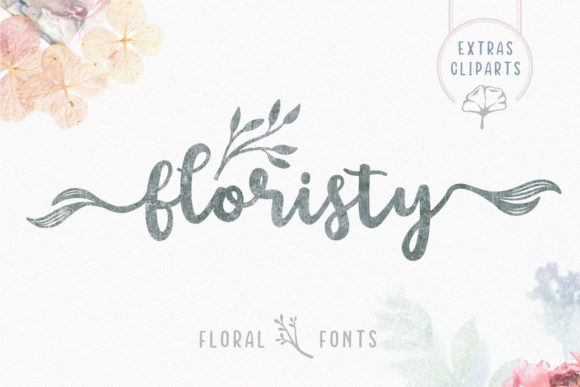
It started with a candle label — one I’d sketched three times, printed twice, and still wasn’t sure about. The scent was lavender-vanilla, the jar was matte white, and the vibe I wanted? Warm, intentional, quietly elegant. That’s when I opened Floristy. Not as a last resort, but as a quiet instinct — like reaching for my favorite brush pen instead of a ruler. Floristy is a unique brush style handwritten font, and from the first glyph, it felt *alive*: soft-edged, confident in its flow, full of subtle variation that mimics real ink on paper. This isn’t a stiff script or a trendy bounce — it’s timeless, unhurried, and deeply human. As a Script Handwritten font, Floristy lives where authenticity meets polish — perfect for fonts that need to carry heart, not just hierarchy.
Floristy for Wedding Invitations and Elegant Branding
I used Floristy for a set of hand-calligraphed-style wedding invitations — not for full body text, but for names, dates, and “RSVP” headers. Its PUA encoded structure meant I could access alternate glyphs and swashes directly in Canva and Illustrator, swapping in flourished capitals or delicate connecting letters without hunting through character maps. Because Floristy is a Script Handwritten font built for display use, it shines brightest at 24pt and up — ideal for invitation suites, welcome signs, and ceremony programs where every word feels like a quiet promise. Paired with a clean sans serif (think Montserrat Light or Inter) for addresses and details, Floristy adds emotional resonance without sacrificing clarity. For boutique stationery sellers, this pairing becomes signature branding — instantly recognizable, effortlessly refined.
Floristy for Candle Labels and Small-Batch Packaging
Back to that lavender-vanilla candle: Floristy became the hero on the front label — “Wild Bloom” in all caps, each letter slightly varied, with gentle pressure modulation that mimics real brushwork. Because Floristy is a unique brush style handwritten font, it reads as handmade even when printed digitally. I tested it at 14pt on 2” x 1.5” sticker labels — crisp, legible, and charmingly imperfect. No thin hairlines to break on vinyl cutters; no overly tight spacing that jams in Cricut Design Space. As Fonts go, Floristy balances decorative flair with practical cutability. For small-batch makers using Silhouette or Cricut, this matters: you get expressive typography that actually cuts cleanly, especially when you avoid ultra-thin swash tails on tiny labels. Always preview your text at actual size before exporting SVGs.
Floristy for Printable Wall Art and Digital Downloads
When designing printable wall art for a spring collection, I leaned into Floristy’s timeless style for phrases like “bloom where you’re planted” and “slow & lovely.” Its natural rhythm — slight ascenders, open counters, graceful entry/exit strokes — gives digital printables warmth and intentionality. As a Script Handwritten font, Floristy avoids the sterility of over-digitized scripts, making it ideal for planner pages, affirmation cards, and quote-based downloads. Since Floristy is PUA encoded, I accessed stylistic alternates to vary repeated words across a set — keeping visual interest high without needing multiple fonts. For Etsy sellers bundling digital templates, that flexibility means richer previews, more cohesive collections, and consistent brand voice across PDFs, PNG overlays, and Canva-compatible files.
Floristy for Boutique Tags, Tote Bags, and Shop Signage
A linen tote bag needs presence — not noise. Floristy delivered: “gather things that bring you joy” curved gently along the bottom hem in a single line. At 36pt on fabric, its brush texture translated beautifully — soft but bold, personal but polished. Same with kraft paper gift tags: Floristy’s weight distribution kept “thank you” legible even at 10pt, especially when I avoided the most ornate swashes for micro-text. As Fonts go, Floristy works best for short phrases, names, titles, and decorative wording — not paragraphs. But that’s exactly where makers need it most: on product tags, shop banners, seasonal signs (“hello, autumn”), and packaging accents. Its timeless style bridges farmhouse charm and modern minimalism, making it versatile across niches without feeling generic.
Floristy for Greeting Cards and Handmade Stationery
I printed a run of birthday cards using Floristy for the cover sentiment — “happy birthday to you” — then switched to a simple serif for the inside message. That contrast is magic: Floristy carries emotion; the serif carries readability. Because Floristy is a unique brush style handwritten font, it invites pause. It slows the eye. That’s powerful for greeting cards meant to be held, re-read, saved. When testing on textured cardstock, I found Floristy’s thicker strokes held up better than spindly scripts — no fading, no fragile terminals. For stationery designers building physical or digital card suites, Floristy adds premium font weight and editorial design depth without requiring calligraphy skills. Just type, adjust tracking for airiness, and print.
Floristy for Planner Pages and Seasonal Craft Designs
For a printable holiday planner, I used Floristy for section headers — “cozy mornings,” “gift list,” “tree trimming day.” Its warm, inviting cadence made functional pages feel personal. As a Script Handwritten font, Floristy softens rigid grids and adds tactile warmth to digital tools like GoodNotes or Notion (via embedded PNGs). Because Floristy is PUA encoded, I accessed holiday-themed alternates — think a looping “o” shaped like a wreath or a “y” with a bow-like terminal — without installing extra fonts. Real talk: always check what’s included before purchasing. Does it have OpenType features? Swashes? Multilingual support? Commercial license for resale? For crafters selling printable planners or seasonal SVG bundles, those details protect your business and elevate your output.